Tuesday, 21 July 2015

Reuben Rose Poetry Competition 2015

Reuben.RoseThe 26th annual Reuben Rose Poetry Competition of Voices Israel is open for entries, now until 15 September 2015.

Reuben Rose was among the four founder members of Voices Israel in August 1971 along with Leslie Summers, Moshe Ben-Zvi and Jacob Katwan.

Voices.Israel.LogoWinners of cash prizes and honourable mentions will be published in the 2016 issue of Voices Israel. Poems may treat any topic but must be original, unpublished, and no  longer than 40 lines.

Full guidelines and submission fees from: http://www.voicesisrael.com/reubenrosecompetition.htm.

© Natalie Wood (21 July 2015)

Sunday, 19 July 2015

When Fantasy Meets Reality

Here’s something original!

An animated poem describing how a child’s imagination helps him to cope with reality.

The words of  Bensonhurst 1940’s are by American-Israeli Eli Ben-Joseph, a member of Voices Israel while the animation has been created by his daughter, Sarit. The clip will be screened on Wednesday 5 August at the Cinematech in Tel Aviv.

Ben-Joseph, a multi-linguist and translator, is retired from the Western Galilee College where he was a senior teacher of English and Conservation Studies.

© Natalie Wood (20 July 2015)

Friday, 3 July 2015

All Their Sons

Julie.BurchillToday I start with a cliché. Big people make huge mistakes and there’s no-one writ larger in British journalism than the gutsy, feisty, candid Julie Burchill who loves with a great love and loathes with a huge hatred.

Now she’s telling anyone who’ll listen that Jack, her son by her second husband, Cosmo Landesman, also a writer, has committed suicide aged 29.

I am not a mother but understand both from my extended family and those around me here in Israel that there is no emotional anguish more brutal than that of burying a child. Some Israeli parents have seen several children killed in action or as a result of terrorism.

So I hope that as an unswervingly loyal friend of the Jewish community and Israel, Burchill will ponder these things and allow that her pain is being shared with her ex-husband; that indeed her suffering is universal. Meanwhile, as she tries to come to terms with what has happened, Burchill has posted several poems dealing with the loss of children, including the one which follows.
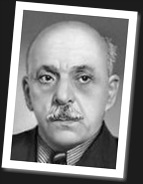
Pavel Grigorievich AntokolskySon was written by the Russian Jewish poet Pavel Antokolsky, a year after the death of his 18 year old son Lieutenant Vladimir Antokolovsky, who was killed in action during World War II on 06 June 1942. Antokolsky, a poet, translator and theatre director was a nephew of the sculptor, Mark  Antokolsky.


--------------

“Son

“Do not call me, father, do not seek me,
Do not call me, do not wish me back.

“We’re on a route uncharted, fire and blood erase our tracks.
On we fly, on wings of thunder, never more to sheath our swords.
All of us in battle fallen, not to be brought back by words.

“Will there be a rendezvous? I know not.
I only know we still must fight.
We are sand grains in infinity, never to meet, never more see light.

“Farewell then my son. Farewell then my conscience.
My youth and my solace my one and my only.

“And let this farewell be the end of a story,
Of solitude vast and which none is more lonely.
In which you remain, barred forever and ever,
From light and from air,with your death pangs untold.
Untold and unsoothed, not to be resurrected.
Forever and ever, an 18 year old.

“Farewell then, no trains ever come from those regions
Unscheduled or scheduled,no aeroplanes fly there.
Farewell then my son, for no miracles happen,
As in this world dreams do not come true”.

“Farewell…

“I will dream of you still as a baby,
Treading the earth with little strong toes,
The earth where already so many lie buried.
This song to my son,is come to its close”.

© Natalie Wood (03 July 2015)

Monday, 1 June 2015

Poetic Slivers from a Dreary Slice of Life

I’ve never attended a Jewish funeral or ‘memorial’ service  that has started with a secular poem and included the universal Lord’s Prayer along with the more familiar liturgy associated with such occasions.


Rabbi Rachel BarenblatBut this, I must suppose, is what you get when you employ the likes of  Rachel Barenblat, an American ‘trans-denominational’ rabbi, who is also a successful  poet and blogs as the ‘velveteen rabbi.

Barenblat was ordained in 2011 via the Jewish Renewal movement by ALEPH: the Alliance for Jewish Renewal and received a second ordination the next year as a mashpi'ah ruchanit (spiritual director).

I found her and the material while researching for items related to Raymond Carver, the American short-story writer and poet, whose stunning and controversially edited four-hander What We Talk About When We Talk About Love  (originally Beginners) forms the central storyline of the Oscar winning film Birdman.

Before I look at Carver’s work here, I must observe that Barenblat’s compilation is the third inappropriate use of The Lord’s Prayer I’ve seen in the past ten days. The Lord's Prayer

As a kid I was advised that it was the only prayer from  Christian sources (Matthew 6:9-13 and Luke 11:2-4) that I may recite because it does not refer  to anything specifically Christian.

Its words are very beautiful, so I am not surprised that a Jewish singer like Barbra Streisand has recorded a musical Christmas version for her legion of fans.


However,  even as a non-religious person who considers herself open-minded, I have been disgusted beyond measure to see it parodied and profaned  twice by  contributors to a UK-based poetry website site, with the full complicity of the site-owner.  Doubtless,  those involved consider themselves super cool and smart. I just see their antics as sacrilegious and more evidence of  the irredeemable vulgarity and degradation of British culture. Ugh!

------------

Now to work!

Raymond.CarverFor long periods of his life, Raymond Carver behaved very badly. His descent into alcoholism almost killed him; he acted violently towards his first wife, Maryann Burk and described his children as an "oppressive and often malevolent" influence who "were eating me alive"…

His daily life informed much of his fictional output and to read the words of ‘Terri’ in What We Talk About When We Talk About Love is to understand Maryann, who continued to love Carver despite everything.

While his domestic turmoil continued  to escalate, Carver first became a modern short story pioneer and then moved toward poetry.  This is where current flash story writers must feel a strong empathy as many of us also try our hands at verse because of the effort taken to use an ever-increasing distillation of language.

So I end where Rabbi Rachel Barenblat begins her strange English language  trans-denominational ‘memorial’ service with Carver’s Late Fragment. The poem also opens Alejandro González Iñárritu’s Birdman,  viewing which was surely among the weirdest and most frustrating 119 minutes of cinema I have ever spent.

“Late Fragment

“And did you get what

you wanted from this life, even so?

I did.

And what did you want?

To call myself beloved, to feel myself

beloved on the earth”.

© Natalie Wood (02 June 2015)

Sunday, 24 May 2015

A ‘Need’ to Break the Silence!

The poem Need written by deaf poet Peter Cook and his hearing counterpart, Kenny Lerner was devised in 2008, partly as a response to the wars in Iraq and Afghanistan

The clip below is barely 60 seconds long but extremely intense. Beneath it, I’ve re-posted  the translated transcript of the poem from American Sign Language into English by John Lee Clark whose explanation of his work may be found at Split This Rock. 

Further down still, there are reactions from YouTube commentators. This is because I’m wholly unqualified to discuss any sort of deaf sign language and also because it helps to illustrate the thinking of the citizens of the international deaf and hard-of-hearing community. The individuals’ names  and online soubriquets have been removed to preserve their anonymity.

Need

Need, desperate need, eagle-taloned need

is a pumping drill. The oil sloshes

to the brim. The lid slams and it’s a tanker

spewing smoke. It burps and hisses

into a truck. It barrels through highways. It pours

down underground. It’s a gas pump and a car

and a stopping and a refilling and a continuing.

It pulls over at the side of a tall tree.

It chops and strips and grinds and pounds

until dead fish float downstream

and our need is a single sheet of paper

sliding into a typewriter. It folds and licks

and places three stamps and sends on beating wings

to a door opening somewhere. A man reads it and fastens his chin strap, carrying a rifle as bodies

fall and things go up in flames. It finds him

and the coffin lid closes. As soon as it stakes

a cross in salute, the crush comes again

to squeeze the soil for more. O need,

desperate need, eagle-taloned need, why

do we need you so much?

---------------

In Peter S. Cook’s poem titled Need one finds the performer giving a social commentary on the dependence of oil in the world and how the human race uses oil and then becomes the commodity upon death making the cycle of dependency circular. Mr Cook opens and closes the piece by using the X (:05 - :10) and (1:55 – (1:58) hand shape to denote the ASL sign need. With the use of rhyme and rhythm, Cook effectively shows how the cycle completes itself.  The ‘x’ hand-shape becomes the drill which pumps the oil.

Next, the poet offers exaggerated hand-shapes and extensive use of classifiers and NMS (non-manual signals) to depict the way oil is carried from the well through the pipeline to the large cargo ship. Large flat hand-shapes open (:23 - :37) fives and closed Bs with C hand-shapes. I did not consider these features of the poem for RRM but more as classifiers. However, the meter here depicts the size of the ship being huge and the way it lumbers through the water causes me to consider this a feature for effect so more of an NMS classifier rhyme feature.Ken.Lerner.Peter.Cook

This cargo ship docks and then pumps oil into cars, and semi-trucks that is used in the production of wood. This wood is used to make paper that sends a message via airmail to inform of the draft.  One can see the soldier going off to war where he ends up dying and the pressure drips the life blood out of him (like in the opening). This could be considered a rhyme feature and although not exactly the same, there is a connection with the hand-shapes from the start depicting the oil.  We see many archings which could be considered rhythm.  It has an industrial feel; a rhythm that is felt like an underlying pulse; need - - need - - need, which I felt through the piece.

Movements which depict meter and tone to exaggerate the way the world uses oil in abundance and keep the flow and beat of the poem.  The pulse feels like one would see in a flashing diner sign, ever present and daunting; seen but unseen. The meter in this performance shows up by the way the poet offers speed with waves, with car exhaust with the emotion of the paper notice of the draft.  Meter seen as NMS, and also speed at which the poem is delivered offers the audience the ability to see key parts as it develops and makes a poignant statement.  I would almost consider this a story but because of the way it is depicted and the way it uses the beginning and end features of a poem I would consider this poetry with rhyme rhythm and meter”.

American Sign Language (especially when used in poetry) uses a lot of facial expressions... it's akin to using tone of voice when speaking whatever language you speak”.

Very beautiful and touching. We take all of these things for granted and don't realize what our greed (need) is doing to the world we live in; the world that we should instead cherish and protect. What kind of world have we created for our grandchildren? One of hate and greed and war? Oh God, help us to do better and to change! It is too bad that we can't work together in peace and create a better life for all. Imagine what would happen if we all worked together instead of killed each other....”

---------------

  • The Flying Words Project is an American Sign Language (ASL) poetry troupe comprising deaf poet Peter Cook and his hearing co-author Kenny Lerner.

© Natalie Wood (24 May 2015)

Friday, 15 May 2015

The Mourning After

(Source: Times of Israel feature of the international aid and rescue efforts made following the Nepal Earthquake, April 2015 The writer was freelance journalist Melanie Lidman).


The Mourning After

The pen, once deemed stronger

than a sword, is now less useful

than a smart phone or indeed

an axe when reporting figures,

facts as the earth cracks and

countless lives are wracked,

so hacks like me may count the

cost of mass disaster tourism.

ISRAEL.NEPAL.2015


Mother Nature’s seizure on the world’s

roof sucked. But not as bad as that.

The fancy funds from whence I come –

where every penny counts – shrieked

for coin of every mint wrung from those

who freak at sights of doe-eyed dolls

clutching ragged toys pulled from

the scattered chips of stone

they once called home.


I flew in on eagles’ wings

to my strut my journo stuff,

yet was beset by the blur of

iridescent colour made –

not from psalmic hues of sky and sun -

but Day-Glo coloured vests, hats and

pants with stripes enough to make Blake’s

tiger run.

‘You couldn’t make it up’?

We did. A little bit.

We massaged numbers

of the dead; the looters;

those left un-housed, unclothed,

not fed.

I still blush at what I did – or not.

Just watched, detached, the

bodies bagged; the maimed

mended, the starving made replete.

‘Quakes, floods are fine tableaux

when viewed from the vantage of

an eyrie. But in the flesh they’re

like another war. The frenzy fix

is great. But the mourning after?

I’m hung-over. Quietly appalled!

© Natalie Wood (16 May 2015)

Saturday, 9 May 2015

PerfectlyWriteFamilyTales: The End of FridayFlash.org.?

PerfectlyWriteFamilyTales: The End of FridayFlash.org.?: In announcement that could well be the opener for a micro-mystery, Jon Strother of  FridayFlash.org has announced the closure of the webs...