Tuesday, 19 February 2019
Alwayswriteagain: Why Israelis Love ‘Green Bóok’
Alwayswriteagain: Why Israelis Love ‘Green Bóok’: It is no surprise that Peter Farrelly’s hit movie Green Book continues to delight Israeli audiences: The real story behind it has ...

Monday, 18 February 2019
’Boy’ or ‘Boss’: Water Keeps a Hit Movie ‘Green’!
If there’s a song whose meaning I’ve always misconstrued, it’s those of the American folk melody, Water Boy.

I first heard it sung in a satirical version by American Jewish comedian, Allan Sherman. But even later, hearing the real lyrics, I mistook them as a call to the cotton field workers’ own slave – the abused child who brought them water during their labours.
I could not have been more wrong!
According to contributors to Lyrics Mode it is a prison work song and the prisoner, doing hard labour, laments how his bad luck gambling in card games has cost him ‘silver and gold’ – along with his liberty. The singer is either calling for the water boy to bring him water or is telling the guard, whom he calls ‘boss’ how hard he's working and that he's the best worker on site. It is suggested further that the word ’boy’ is mistranscribed from the original and should be ‘boss’.
There are innumerable versions of Water Boy, with fans claiming a wide range of musical references encompassing classical composers, a Jewish marriage song and a Native American tune.
The song and the many artistes who have covered it have enjoyed renewed interest with the release of the movie, Green Book as The Don Shirley Trio recorded a most compelling instrumental version.
-----------
Water boy, where are you hidin’
If you don't come right here
Gonna tell you pa on you
There ain't no hammer
That's on a this mountain
That ring like mine boy
That ring like mine
I'm gonna bust this rock boy
From here to the Macon
All the way to the jail boy
All the way to the jail
You Jack o diamond
Jack o diamond
Know you of old boy
I know you're of old
You rob-a my pocket
Rob my pocket
Silver and gold boy
Of silver and gold
There ain't no sweat boy
That's on a this mountain
That run like mine boy
That run like mine
© Natalie
Wood (18 February 2019)
Tuesday, 5 June 2018
Of the Burning of Jewish Books There is No End …
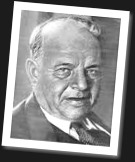
Four modern Hebrew poets whose work has had such a profound impact on Israeli life and culture that their verses are sung in kindergartens while one has given a name to a recent war.
What’s more, observed Dr Eli Ben Joseph addressing the English speakers group at the Emet Veshalom Progressive Synagogue in Nahariya, northern Israel, it is thrilling to note that Rachel Bluwstein – known universally as ‘the poet Rachel’ – was the first woman to write in Hebrew since the biblical judge, Deborah.
Dr Ben Joseph, a US-born Israeli of 44 years standing, who taught English as a foreign language at the Western Galilee College near Acco, also examined the work of Leah Goldberg, Yehuda Amichai and Chaim Nachman Bialik, who is regarded as Israel’s national poet.
As present-day Israel is still the home of the ‘People of the Book’, it is difficult to exaggerate what has been described as the ‘mythological ‘status’ of personalities like these four:
There are signposts to the cemetery near Lake Kinneret in Tiberias where Rachel lies. Bialik’s Tel Aviv house, converted into a museum, is a major tourist attraction while streets, a moshav and a suburb of Haifa are named after him. Goldberg, like Rachel, is among four poets featured on Israeli banknotes while it is said that Amichai is the most translated Hebrew language poet since King David!
But here I would like to examine an aspect of Bialik’s life not touched upon either by Dr Ben Joseph or former UK MP and broadcaster Michael Portillo, who featured the poet in his BBC documentary, Rail Journey in the Land of Israel, and that was screened last night for an ESRA Karmiel crowd.
It is something I thought about in relation both to the ‘Kaddish’ prayer protest in London last month and historic rows in world Jewry from biblical times onward.
The poet was born into a traditional Orthodox Jewish Russian family and studied at Talmudic academies in Russia and Lithuania. But as a young adult he drifted away from the life for which he had been prepared and it appears that there were those in ultra-strict circles who viewed his later activities as behaviour somewhere between gross disrespect and brazen treachery.
So they burned his books!

Bialik wrote in Yiddish as well as Hebrew, so it is not clear from what I have read what caused so much animus among the ultra-religious. I would welcome input from anyone who reads this feature.
Meanwhile, in view of the innumerable anti-Jewish book burnings that have occurred in history, it is hard to over-dramatise the malice that may inspire one set of Jews to thus destroy another Jew’s work on a matter of so-called religious principle.
But it is clear that Bialik’s stature and legacy prove he had already won the argument almost without breaking into a sweat. He continues to be regarded as Israel’s best known, most loved literary giant while his enemies lie as dust and ashes, their work forgotten – except in relation to him.
© Natalie Wood (05 June 2018)
Wednesday, 31 January 2018
Tuesday, 30 January 2018
Alwayswriteagain: The Music and Murder of Trees
Alwayswriteagain: The Music and Murder of Trees: As Israelis celebrate Tu B’Shevat - the biblical ‘birthday for trees’ - residents of the leafier suburbs of Sheffield, Yorkshire, England a...
Sunday, 17 September 2017
כתיבה וחתימה טובה
Very best wishes for a sweet and successful 5778 to all who are celebrating the Jewish New Year.

Natalie Wood and Brian Fink (Karmiel, Galilee, Israel).
(© Natalie Wood (17 September 2017)
Wednesday, 19 July 2017
Yes: Far Too Soon to Say Goodbye!
As we mark the bi-centenary of the death of novelist, Jane Austen scholars still debate its cause.
Was it tuberculosis, cancer, Addison’s disease or – as most recently suggested – arsenic poisoning that killed her aged only 41?
We’ll never know the full truth. But I reflect on this as I consider the coincidental passing of Ukrainian dissident poet, Irina Ratushinskaya as the modern writer also died far too young, aged only 63.
While the immediate cause was cancer, Ratushinskaya’s constitution had been irreversibly damaged by her incarceration in the ‘small zone’ of a labour camp in the republic of Mordovia, a ‘prison within the prison’ reserved for women deemed as particularly dangerous political criminals.
Initially deprived of paper, she wrote by scratching her work on bars of soap; memorised and erased the verses then rewrote them when paper became available before somehow smuggling them to her husband, Igor Gerashchenko who arranged their publication.
Ratushinskaya had been found guilty in April 1983 of “agitation carried on for the purpose of subverting or weakening the Soviet regime” and so given a maximum sentence of seven years in the camp followed by five years internal exile.
She was released suddenly on the orders of Soviet leader Mikhail Gorbachev who wanted to prove he was genuine about improved domestic human rights as part of his policy of glasnost (openness) and perestroika (reconstruction).
Ratushinskaya then emigrated to the U.K., moved on to the United States and then returned to Russia in 1998, settling in Moscow with her family, but in relative obscurity.

I conclude this short tribute with her appropriately titled piece, Too Soon to Say Goodbye.
I must point out that the date at the end of the poem implies it was written after her release:
Too soon to say goodbye,
Too soon to say forgive me,
Too soon to send us your instructions:
You know what our luck is like.
Not a door but it will be locked!
Not a net but it will be cast!
Others took to the bottle,
And others just vanished.
Only a few of us left now,
So they're firing at us point blank.
What now? We can read Dostoevsky;
Chip in roubles - for vodka,
Only a few of us left anyhow.
And we know we must fight to the death.
And we know that cruel blacksmith
Forged as out of some unknown metal,
Perhaps doubting our endurance,
Perhaps expecting us to recant.
No! Give us your instructions!
We swear to fulfil them precisely.
Too Soon to despair yet.
You ought to know our luck.
Irina Ratushinskaya
Kiev, 9 December 1986
© Natalie Wood (20 July 2017)
Subscribe to:
Posts (Atom)